



One of my Moras Muses asked me to write about deep water and shallow water feeding Las Moras Springs in Brackettville, Texas. Apparently this has been a topic of discussion locally (and may have been sparked by a discussion I had with a groundwater district technical person at a West Texas water conference). The discussion is timely since The Graduate Student Known as Corinne and I have been looking at springflow recession curves for a bit now and have seen some interesting things.
Springflow recession refers to how quickly flows decrease after reaching a peak. If you look at our nifty composite of springflows measured at the springs since 1896 (see immediately below), you can see how flows peak and then quickly recede. The shape of those receding springflows can tell us something about the aquifer feeding the spring.
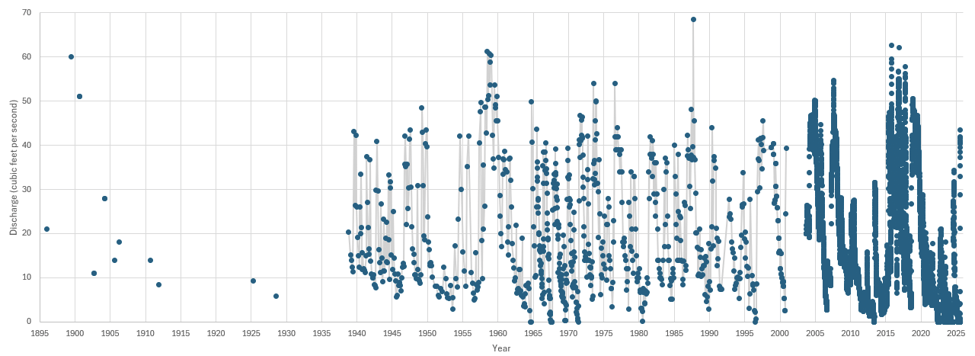
We focused on the data since 2004 with daily measures of springflow and longer recession curves, especially those that cross the long-term average flow of 17.7 cubic feet per second. We first pulled the timestamp and springflow data for each long-term recession curve. We then “centered” each recession curve on the long-term average flow of 17.7 cubic feet per second and calculated time before and after each recession curve crossed that average flow. This results in the graph below. Why do all this calculating? To get each recession curve to plot on top of each other so we can directly compare them to each other.
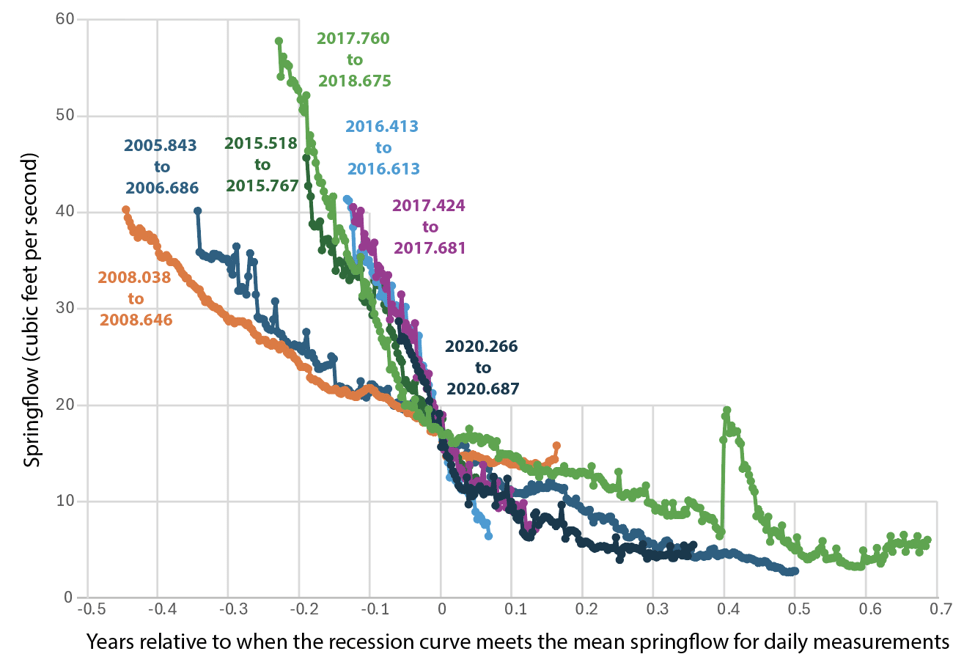
What we see here is interesting because the shapes of these curves suggest something about what is happening in the aquifer. The first thing to notice is that there are two sets of curves: the Steep-Slopers and the Mello-Slopers (we have a third Mello-Sloper identified that is not shown yet). The Steep-Slopers descend sharply (spring flows decline rapidly) until 10 to 15 cubic feet per second when they abruptly transition to a mellow slope. The Mello-Slopers follow a more mellow slope that gradually declines over time all the way through the recession. The green line shows a small spike in flow at 0.4 years but then quickly reverts back the mellow slope before showing a minor rise.
The change in slope for the Steep-Slopers suggests that water in the shallower parts of the aquifer travels more quickly until the shallow zone is drained upon which the deeper, slower part of the aquifer takes over. Therefore, the shallower water is likely younger and akin to “flood flows” in a river before becoming exhausted and turning the reins over to something akin to “base flow” in a river, which is the older, slower water in the system (something I can personally relate to…). The Mello-Slopers slope mellowly over time, slowly decreasing in slope with no sharp changes.
Having two distinct families of curves is interesting and not something we’ve found yet in the scientific literature. They suggest two different flow systems contributing to the springs: a local, flashy system as indicted by the Steep-Slopers and a more regional, base-flow system as indicted by the Mello-Slopers and the Steep-Slopers for flows less than 10 to 15 cubic feet per second. It’s also interesting how the mellow slopes for the Steep-Slopers look like those of the Mello-Slopers. As far as old water/young water is concerned, we expect Mello-Sloper water to be older than Steep-Sloper water due to slower (and presumably longer) flowpaths.
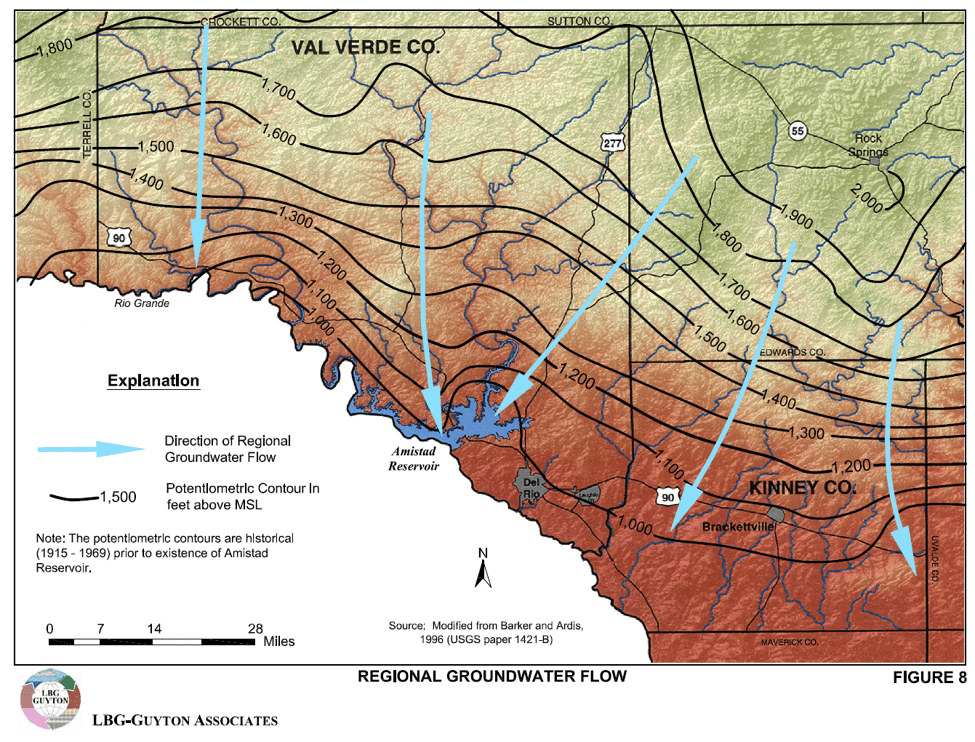
Gawking at where the water for Las Moras Springs is probably coming from, this all (might) make sense. There is a local component of flow in the immediate area of the springs and a more regional component of flow from north of the county. Additional detail work would have to be done to try and map out rainfall locations and timings and the effects of that rainfall on springflow. This is outside the scope of Corinne’s work, but is something more that could be done in the area in the future.
Dr Seuss didn’t write a book titled Deep Water, Shallow Water, Old Water, Young Water, but he did namecheck hydrogeology in his book McElligot’s Pool:
“This MIGHT be a pool, like I’ve read of in books,
Connected to one of the underground brooks!
An underground river that starts here and flows
Right under the pasture! And then… well, who knows?”
Connected indeed, perhaps to more than one underground brook!
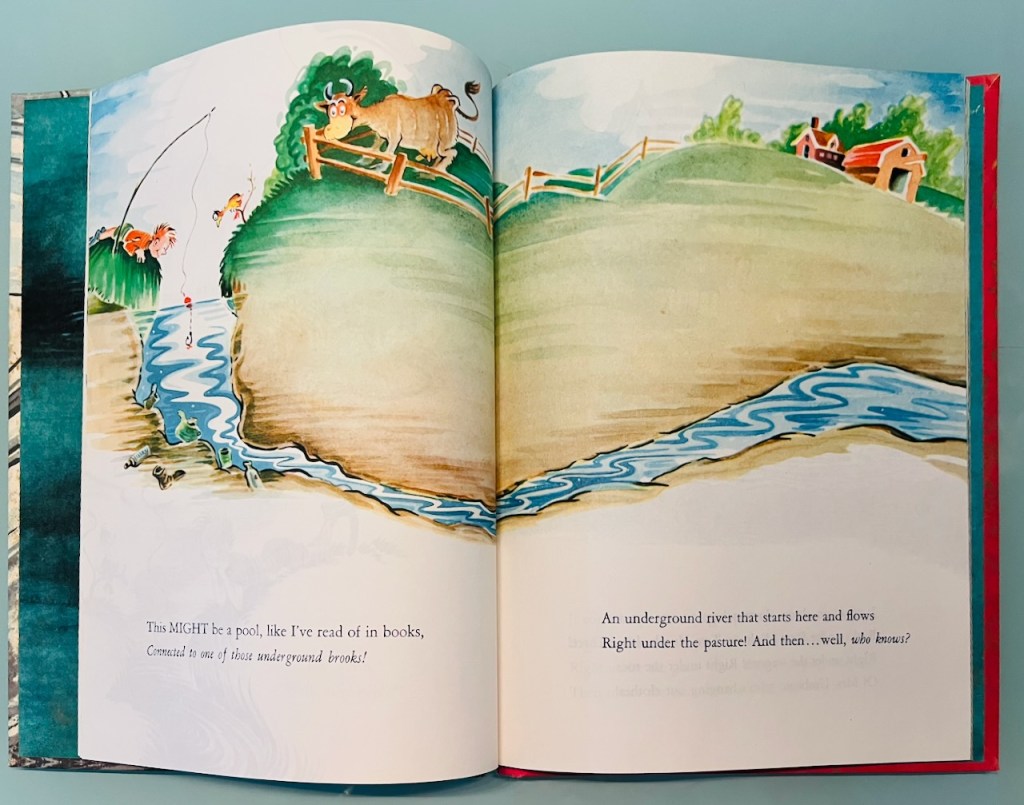
Updated on June 19, 2026, with a new image of pages from the (real) Dr. Seuss after buying a copy!

